
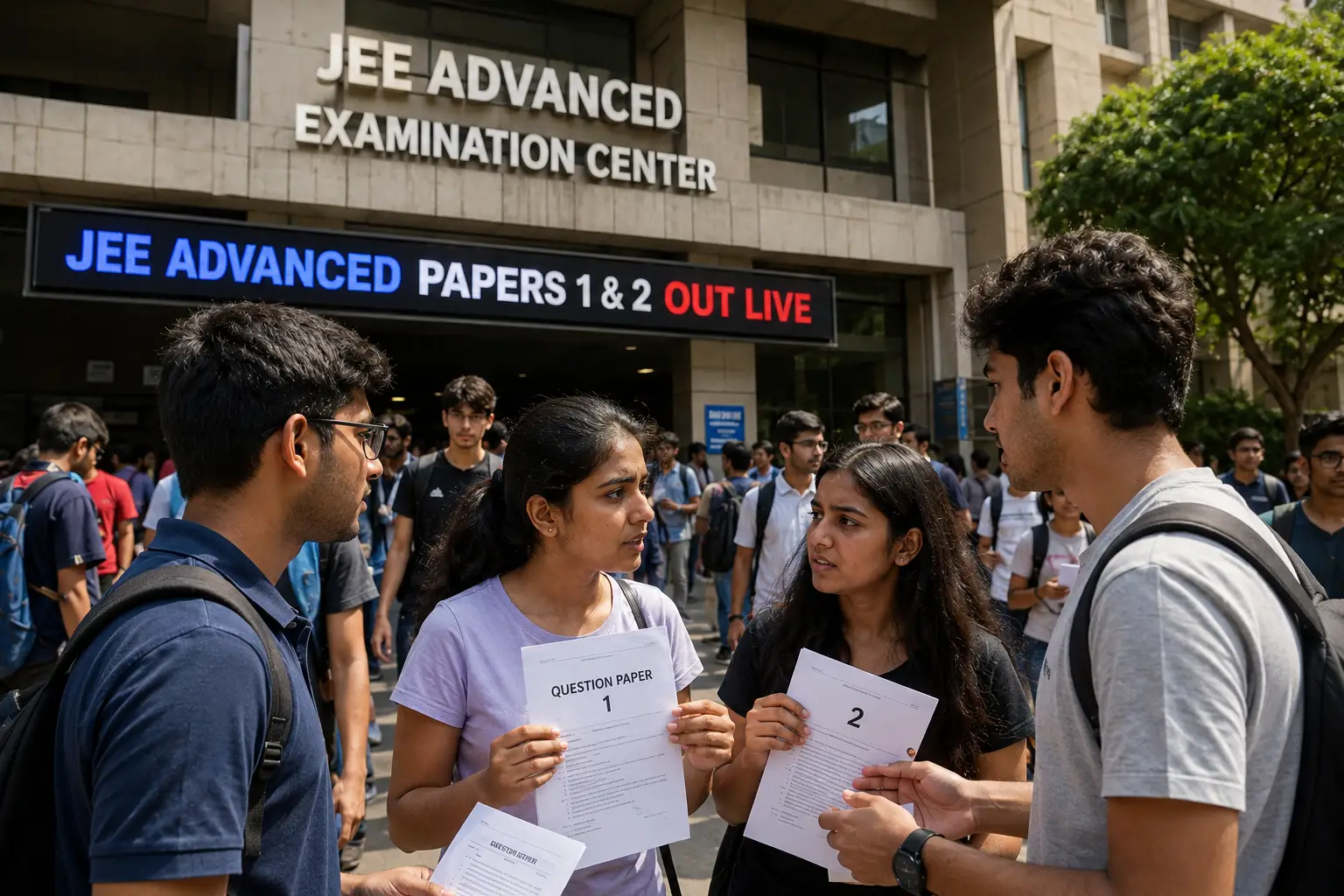
JEE Advanced 2026 Question Papers 1 & 2 are now OUT! IIT Roorkee released the official papers. Get the LIVE updates, download links, and key dates for the answer key.
IIT Roorkee Releases Official Papers
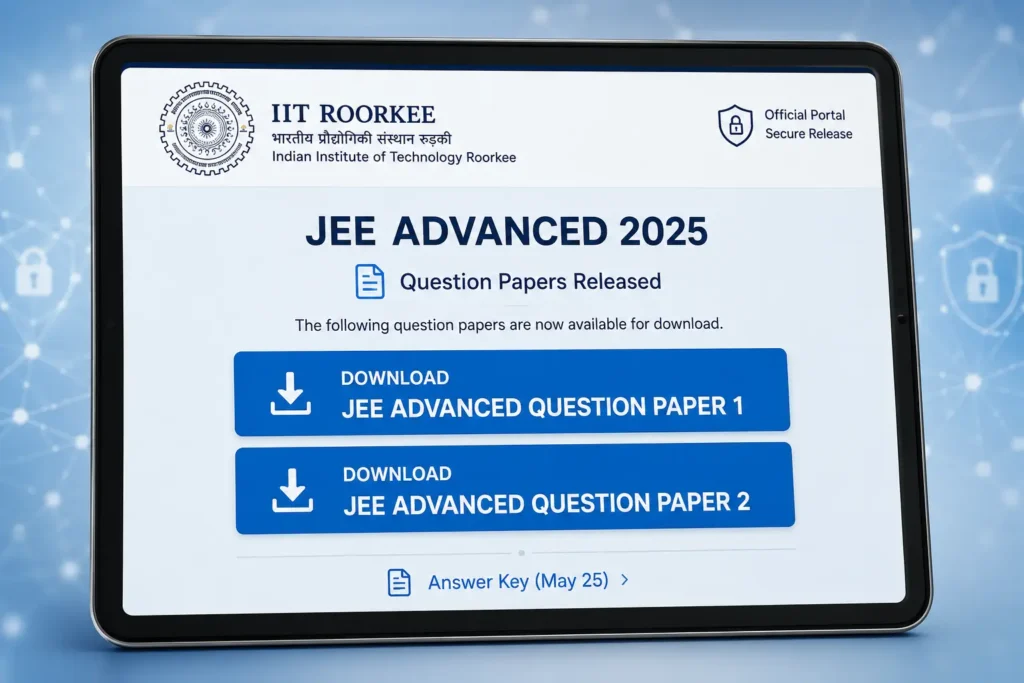
Candidates can now access Paper 1 and Paper 2.
•Official Source: The Indian Institute of Technology, Roorkee (IIT Roorkee), has officially released the question papers for the JEE Advanced 2026 examination.
•Paper 1 & 2: Both papers, corresponding to the morning and afternoon sessions, are available. This release is crucial for students to begin self-assessment.
•Format: The question papers are available in PDF format, ensuring easy access and portability for analysis.
Live Updates and Analysis

What experts and students are saying about the difficulty level.
•Initial Impressions: As the papers became public, students and experts began analyzing the questions. Early reviews suggest a varied difficulty level, with specific challenging sections in Mathematics and Physics.
•Physics, Chemistry, Maths Breakdown: Comprehensive reviews for each subject will be available shortly, detailing the topics covered and the nature of the questions (analytical vs. straightforward).
•Comparison: Many students have compared the 2026 paper’s structure and difficulty with previous years.
Important Dates and Answer key
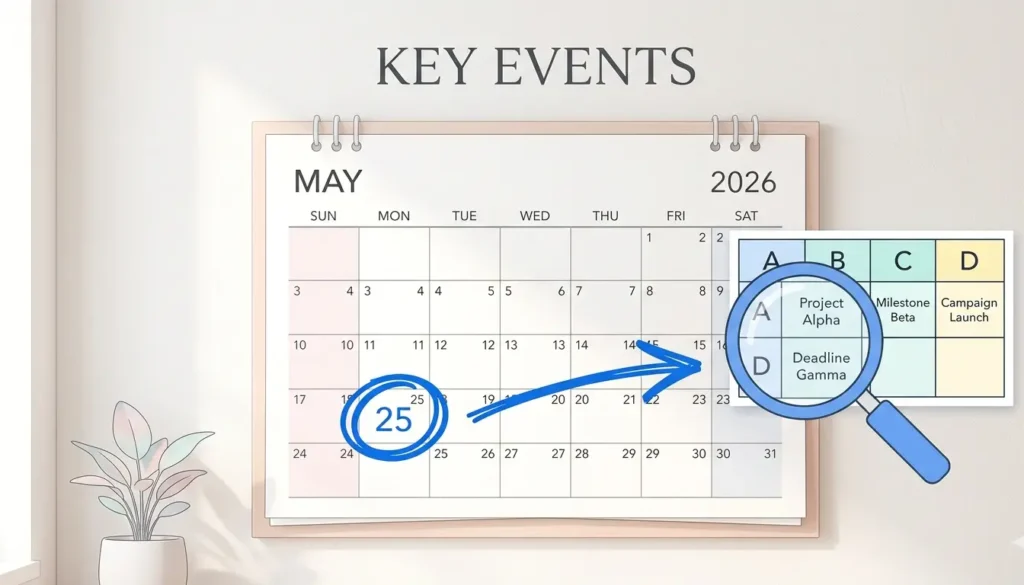
Mark your calendar for the preliminary key and challenge period.
•Key Date: The provisional JEE Advanced 2026 answer key is scheduled to be released on May 25, 2026.
•Downloading the Key: Students must visit the official JEE Advanced website to download the answer key.
•Challenge Period: Following the answer key release, a window will open for candidates to submit challenges if they find any discrepancies in the provisional key. The specific dates will be announced alongside the key.
Marking Scheme and Paper Pattern
Understanding the structure of Paper 1 and Paper 2.
•Multiple Choice Questions (MCQs): Both papers feature objective-type questions with a mix of single correct options and multiple correct options, which require careful elimination.
•Numerical Value Questions: A significant portion of the exam includes questions where the answer is a specific numerical value or decimal, testing absolute calculation accuracy.
•Negative Marking Warning: Candidates must remember that most sections carry negative marking for incorrect answers, making wild guessing highly risky.
•Partial Marking System: In questions with multiple correct options, partial marks are awarded if a candidate selects only some of the correct choices without choosing any wrong ones.
Next Steps: How to Challenge the Answer Key
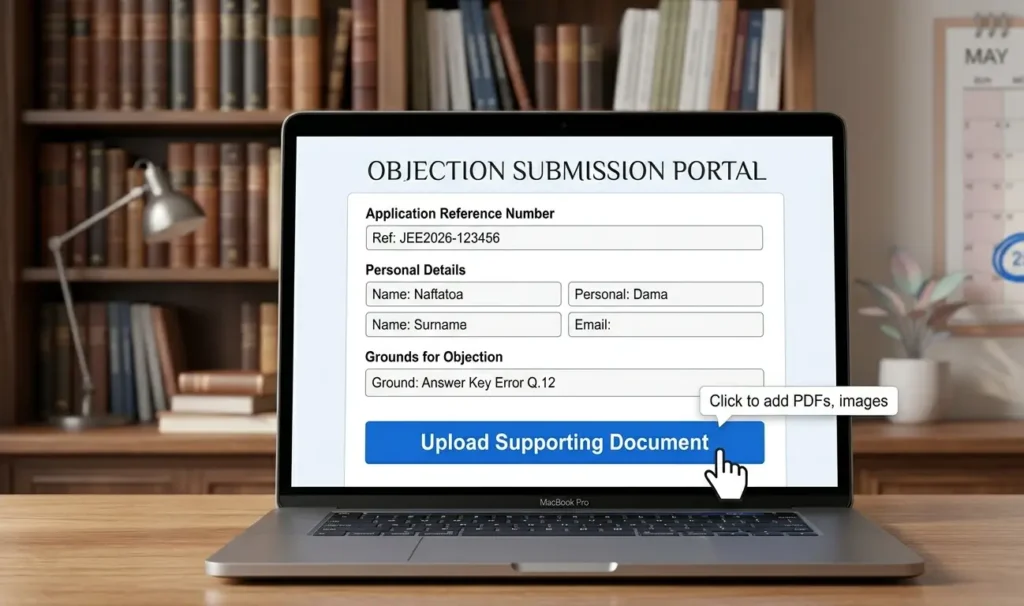
The official process to raise objections if you find any discrepancies.
•Provisional Key Window: Once IIT Roorkee releases the provisional key on May 25, students will get a window of 2-3 days to review it thoroughly.
•Submitting Objections: Candidates can log into the official online portal using their credentials to challenge any answer they believe is incorrect.
•Documentary Proof Required: For every challenge raised, students must upload valid, textbook-backed documentary proof or a step-by-step solution to support their claim.
•Final Answer Key & Results: A panel of subject experts will review all student challenges, after which the Final Answer Key and the official JEE Advanced Results will be declared simultaneously.
Expected Cut-Off Trends for Top IITs
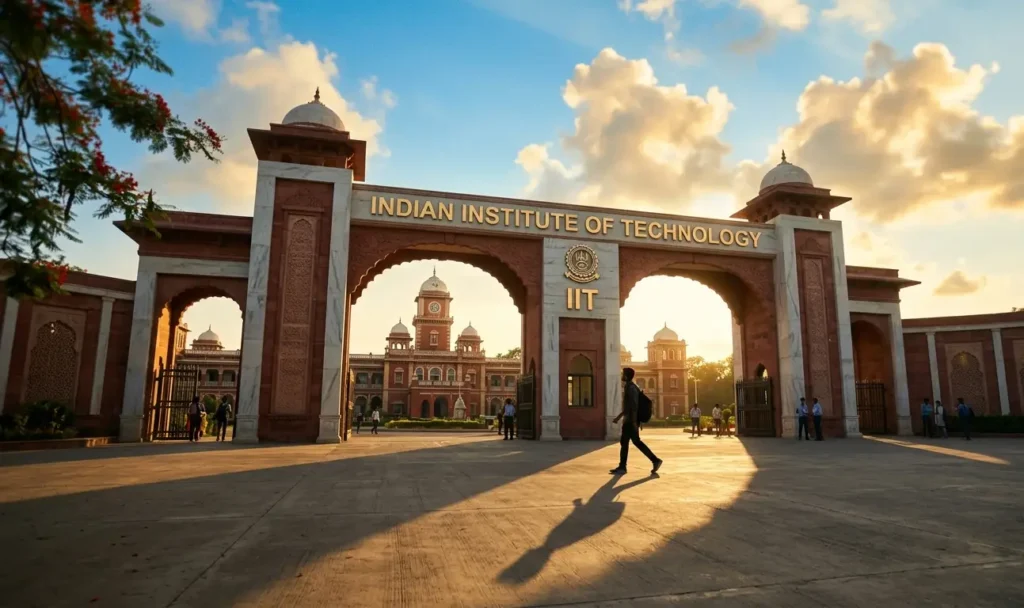
What score could secure a seat in the premier engineering institutes?
•Difficulty Dependency: The official qualifying cut-off changes every year depending on the collective performance of the students and the overall difficulty of Paper 1 and 2.
•Category-Wise Split: The cut-offs will be released separately for General, OBC-NCL, SC, ST, and PwD categories, both for qualifying the exam and for individual subject cut-offs.
•JOSAA Counselling Prep: Immediately after the results, the Joint Seat Allocation Authority (JoSAA) will begin the registration process for seat allocation across all 23 IITs.
•Expert Prediction: Based on early student reactions to the 2026 papers, experts suggest that the cut-off for top branches like Computer Science (CSE) at IIT Bombay or IIT Delhi will remain highly competitive.